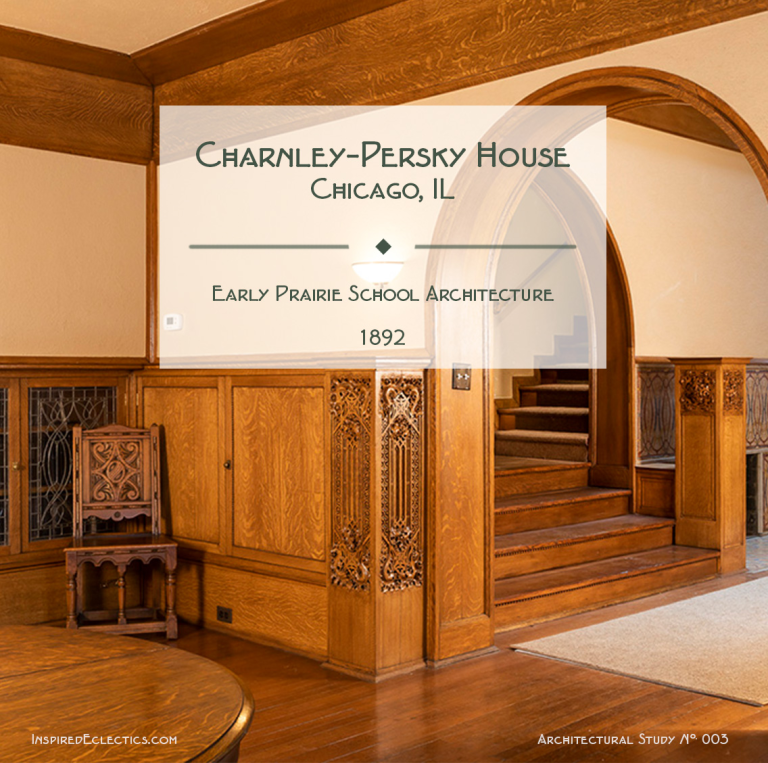
Charnley-Persky House

The Charnley-Persky House Early Prairie Architecture Designed 1892

Originally commissioned by lumber executive James Charnley, this Chicago residence marks an early turning point in American residential architecture. Designed in the office of Louis Sullivan, with participation from a young Frank Lloyd Wright, the house abandons Victorian ornament in favor of proportion, symmetry, and restraint.

A planar brick façade, limestone detailing, and carefully ordered windows emphasize surface and geometry rather than decoration.

A quiet step toward modern American architecture.

© Society of Architectural Historians

Designed by Sullivan, assisted by Wright

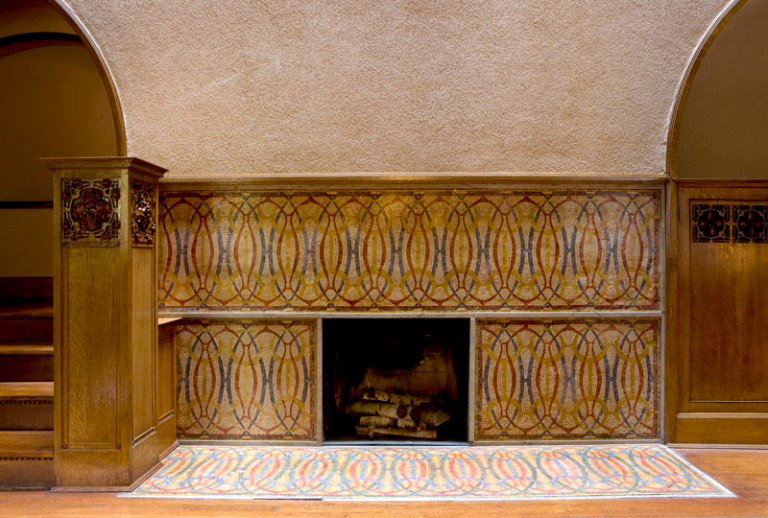
Designed during Wright’s early collaboration with Louis Sullivan, the Charnley‑Persky House marks a transitional moment in American residential architecture. The building moves away from Victorian complexity toward a more disciplined and geometric architectural language.

The restrained façade, simplified ornament, and clear spatial organization anticipate ideas that would later define the Prairie School. In this sense the house stands as an important precursor to Wright’s mature work.