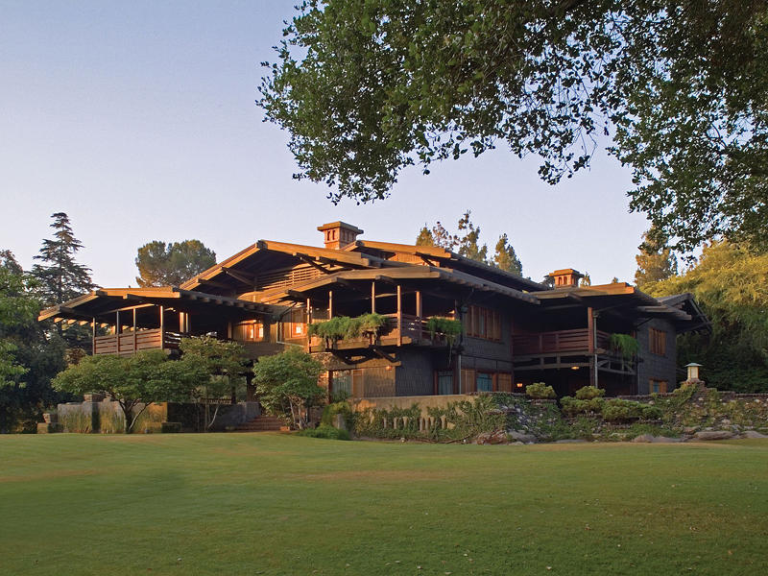
Spatial Experience:
Within the Gamble House, space unfolds as a sequence rather than a single gesture. Rooms are layered and interconnected, defined by low thresholds, deep overhangs, and built-in elements that guide movement without interruption. The transition from compression to openness is subtle but intentional, with ceilings lifting beneath exposed beams and light filtering through art glass and shaded apertures. This creates an atmosphere that feels both intimate and expansive, where structure, material, and proportion quietly shape the experience of inhabiting the home.
Material + Detail:
Material selection plays a central role. Warm-toned woods are allowed to age and deepen over time, reinforcing the connection between the house and its environment. Unlike more formal architectural traditions, there is no attempt to conceal construction. Instead, the structure is revealed, celebrated, and refined.
Today the Gamble House remains an important reference point within the study of arts and crafts architecture and continues to influence architectural scholarship and preservation.