Blacker House

Architect:

Greene & Greene

Location:

Pasadena, California

Region:

West

Year(s):

1907

Style:

Arts & Crafts Architecture

Secondary:

American Craftsman

Status:

Privately Owned
National Historic Landmark

NOTES
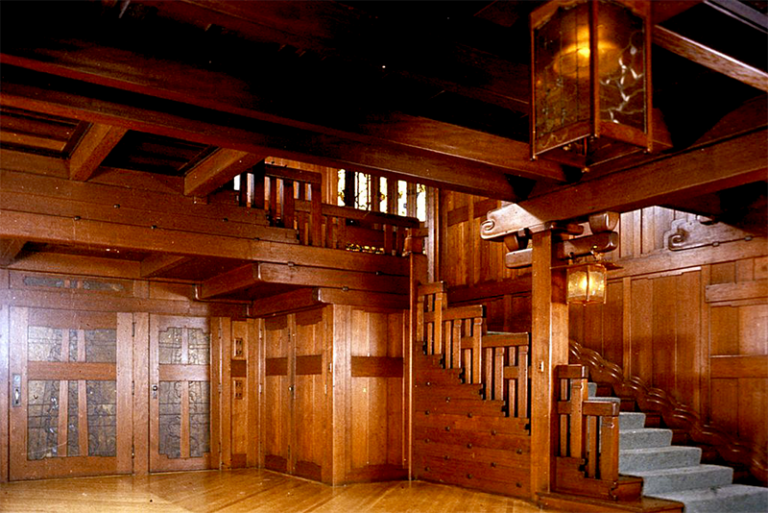
Considered one of the finest surviving examples of Greene & Greene residential architecture. The residence is noted for its extraordinary integration of architecture, furnishings, lighting, joinery, and decorative detail into a unified Arts and Crafts composition.

The architects emphasized structural expression through exposed joinery and carefully articulated transitions between materials.  Architecture where craftsmanship becomes inseparable from the building itself.

Commissioned by Robert Roe Blacker, this Pasadena residence represents one of the most refined expressions of American Arts and Crafts architecture. Designed by Greene & Greene, the house combines structural clarity, handcrafted detail, and rich material composition into a unified architectural environment.

Teak, mahogany, stone, art glass, and carefully integrated furnishings establish a sense of warmth and permanence throughout the home.

Craft elevated through architecture.

Spatial Experience:

The Blacker House unfolds through a carefully layered sequence of interior and exterior spaces. Deep roof overhangs, sheltered terraces, and transitional thresholds soften the movement between rooms while reinforcing the connection between the residence and its surrounding landscape.

Interior spaces maintain a strong sense of intimacy despite the scale of the house. Ceiling heights, filtered natural light, exposed structure, and integrated furnishings create an atmosphere that feels both monumental and deeply human in proportion.

Material + Detail:

Greene & Greene approached the Blacker House as a total work of design, integrating architecture, craftsmanship, and decorative arts into a single composition. Hardwood joinery, custom metalwork, leaded art glass, carved ornament, and layered wood surfaces establish a remarkable level of tactile richness throughout the residence.

Rather than concealing construction methods, the architects emphasized structural expression through exposed joinery and carefully articulated transitions between materials. The result is architecture where craftsmanship becomes inseparable from the building itself.


  • Integrated architecture, furnishings, and decorative arts
  • Extensive use of exposed joinery and handcrafted detailing
  • Strong Japanese influence in proportion and spatial transitions
  • Estate-scale composition balanced with intimate interior proportions
  • Architecture conceived as a complete handcrafted environment

The house was commissioned by Robert Roe Blacker, a prominent Pasadena businessman whose patronage allowed Greene & Greene to fully realize one of their most ambitious residential commissions. The project became a defining work of the American Arts and Crafts movement and remains one of the firm’s most celebrated residences.